
Most city grease programs in the US boil down to one number: 25%. Once the floating grease and the settled solids in a grease trap or interceptor take up a quarter of its liquid depth, the trap is due to be pumped, no matter when it was last serviced. Many programs pair that with a calendar maximum, often every 90 days, and say pumping is due at whichever comes first.
This guide explains how the grease trap 25% rule is worded in published city documents, how to measure it with a worked example, how it interacts with time-based minimums, and what paperwork usually follows a pump-out. It is written for pumping companies and the restaurants they serve.
Not legal advice. Your city, county or utility sets the rule that applies to each site; check its current ordinance or program page. Pumpiqo is not affiliated with any government agency.
What the grease trap 25% rule says
A grease trap works because fats, oils and grease (FOG) float and food solids sink. Clean water leaves through an outlet between the two layers. As the top and bottom layers grow, the clear zone in the middle shrinks, wastewater moves through faster, and grease starts to escape into the sewer. The 25% rule is a simple point at which the trap has to be emptied before that happens.
Published versions of the rule are very close to each other:
- The Sewerage and Water Board of New Orleans says grease traps in active use « should be cleaned at least once every three months or when the accumulation FOG and settled solids reaches 25% of the grease interceptor’s overall liquid depth – whichever occurs first » (SWBNO, Grease Traps 101).
- Sioux City, Iowa requires exterior grease interceptors to be maintained by a certified hauler when the 25% point is met, and interior grease traps to be maintained « weekly, at a minimum, or when the 25% rule is met, whichever comes first » (Sioux City WWTP, Understanding Grease Removal and the 25% Rule).
Two details differ between programs, and both matter when you service sites in more than one city:
- What the 25% is measured against. Most programs use the total liquid depth of the interceptor. Some use design capacity or the first compartment of a multi-compartment unit. Read the wording in the ordinance for each site.
- The calendar backstop. The time limit ranges from weekly (small interior traps in Sioux City) to quarterly (New Orleans) to every 90 days (Abilene, Texas, for in-ground traps). Some cities let the restaurant ask for a longer interval if measurements show the trap stays under 25%.
Why cities enforce it
The federal hook is the EPA’s General Pretreatment Regulations. They prohibit discharging « solid or viscous pollutants in amounts which will cause obstruction to the flow in the POTW » (the public sewer and treatment works) under 40 CFR 403.5(b)(3). Local utilities carry out that prohibition through their own sewer use ordinances and FOG programs, which is why the details live at city, county or utility level rather than in one national rule (EPA National Pretreatment Program).
The stakes for a restaurant are practical. New Orleans, for example, states that it holds business owners liable for all costs of removing FOG from the sewer system, including damage to neighboring property and sewer repairs (SWBNO).
How to measure a grease trap against the 25% rule
You need three numbers, all in the same unit (feet or inches):
- Floating FOG layer. The thickness of the grease mat on top.
- Settled solids layer. The depth of sludge on the bottom.
- Total liquid depth. From the bottom of the trap to the liquid surface (the operating depth, not the depth to the lid).
Haulers and inspectors usually take the top and bottom readings with a sludge judge or a similar core sampler: a clear tube lowered to the bottom, closed, and pulled up so the layers can be read against its markings.
Then apply one formula:
(FOG layer + solids layer) / total liquid depth × 100 = percent full
Worked example
Both the Sioux City and New Orleans guides use the same example interceptor:
| Reading | Depth |
|---|---|
| Floating FOG on top | 0.5 ft |
| Settled solids on the bottom | 1.0 ft |
| Total depth of interceptor contents | 4.0 ft |
(0.5 + 1.0) / 4.0 = 1.5 / 4.0 = 37.5%.
That is over 25%, so in both guides the answer is that the rule has been exceeded and the food service establishment needs to pump more often. On a 4-foot liquid depth, the trap should have been pumped once the two layers added up to 1 foot (4.0 × 0.25).
Turning a reading into a schedule
One measurement tells you whether a trap is overdue today. A few measurements tell you how fast it fills. Say a restaurant’s trap is 4 feet deep and reaches 1 foot of combined FOG and solids in about 60 days. If its city also has a 90-day maximum, the 25% rule is the limit that bites, so the pumping cycle should be 60 days or a little less, not 90. Recording the readings at each pump-out is what makes that schedule defensible when an inspector asks how the site meets the grease trap 25% rule.
Two points that guides repeat:
- Additives do not buy time. New Orleans states plainly that bacterial and enzyme products « will not decrease your pump out frequency. »
- Kitchen habits do. Sioux City’s best management practices include scraping and dry-wiping pans into the trash, sink strainers, wash water under 140°F, recycling waste cooking oil, and keeping a log of cleanings. It also notes that cleaning vent hoods, exhaust systems and floor mats makes the trap fill faster, so the next clean-out should be planned accordingly.
The 25% rule and time-based minimums
Almost every program that uses the 25% rule also sets a calendar limit. The trap is due at whichever comes first. A few published examples:
| Program | Calendar limit | Percent rule |
|---|---|---|
| New Orleans (SWBNO) | At least once every three months | 25% of overall liquid depth |
| Sioux City, IA: interior grease traps | Weekly at a minimum | 25% |
| Sioux City, IA: exterior interceptors | Set with the certified hauler | 25% |
| Abilene, TX: in-ground traps | Every 90 days | More often if needed to keep grease out of the sewer |
| Abilene, TX: under-sink traps | Every 30 days or at 2 inches of grease | n/a |
Sources: SWBNO, Sioux City, City of Abilene. Last checked 29 October 2026.
The table shows why one company-wide « every 90 days » schedule is risky for a hauler with customers in several cities. The interval belongs to the site’s jurisdiction and to how fast that particular trap fills.
Who may pump, and what paperwork follows
Many programs restrict who can do the work and require a manifest (sometimes called a trip ticket) for every pump-out. The manifest tracks the waste from the restaurant (the generator), through the hauler, to the disposal site.
Who may pump
- Sioux City publishes an approved hauler list and says those are the only haulers approved for clean-outs and pump-outs.
- New Orleans requires grease removal devices to be maintained by a Sewerage and Water Board permitted transporter.
- Abilene says licensed transporters are the only ones who can legally pump and transport grease trap waste, and links to the Texas Commission on Environmental Quality license lookup.
How the manifest moves
Abilene describes a five-part trip ticket. The transporter starts it after pumping, fills in the generator and transporter sections, and leaves a copy with the restaurant. The disposal site completes its section and keeps a copy, and the transporter returns a final copy to the restaurant (City of Abilene).
The Emerald Coast Utilities Authority in Escambia County, Florida, uses a similar three-section form: the restaurant representative signs when the waste is removed, the driver keeps the manifest until the load is discharged, the disposal site signs, and the transporter must return the original to the restaurant within 15 days of the service date (ECUA Grease Hauler Manifest Form).
How long records are kept
- Abilene: trip tickets must be kept on site for 5 years and be readily available for inspection.
- New Orleans: keep manifests on site for 3 years.
For a hauler, each of these is a deadline or a retention period to track per customer: the copy owed back within 15 days, the next pump-out due date, and the archive the restaurant will be asked to show.
A field checklist for each pump-out
- Confirm which jurisdiction the site is in and which rule set applies (percent basis, calendar limit, permitted haulers).
- Before pumping, measure and record the FOG layer, the solids layer and the total liquid depth.
- Calculate percent full and note whether the trap was over 25%.
- Pump out the trap (many programs expect the full contents removed, not just the top layer; check the local wording) and record the gallons removed.
- Complete the generator and transporter sections of the manifest and leave the required copy.
- Deliver to an approved disposal site and get its section signed.
- Return the final copy within the program’s deadline.
- Set the next due date from whichever comes first: the calendar limit or the fill rate you measured.
FAQ: the grease trap 25% rule
Does the grease trap 25% rule apply everywhere in the US?
No. There is no single national pumping interval. The federal pretreatment rule bans discharges that obstruct sewers, and local programs decide how to prevent them. Many cities use the 25% rule, but the wording, the measurement basis and the calendar limit vary. Check the ordinance for each site.
Is the 25% measured by volume or by depth?
Most published versions use depth: the combined thickness of the FOG and solids layers compared with the liquid depth of the trap. Some ordinances refer to design capacity instead. Use the basis written in the local rule.
If a trap is under 25% at 90 days, can it wait?
Only if the local rule allows it. Where the rule says « whichever comes first, » the calendar limit still applies. Some programs accept a variance request backed by measurement records.
Who keeps the manifest, the hauler or the restaurant?
Usually both, plus the disposal site. In the Abilene and ECUA forms, the restaurant ends up with the completed original and must keep it on site.
Do enzyme or bacteria additives reduce how often a trap must be pumped?
Not under the programs quoted here. New Orleans states that bacterial and enzyme products will not decrease pump-out frequency. Measure the layers instead and pump on the schedule the rule sets.
Keeping the schedule straight
For a pumping company, the 25% rule turns every grease customer into a small set of recurring deadlines: the next pump-out by date or by fill rate, the manifest copy owed back, and the records the restaurant must keep. Pumpiqo is building manifest and service-record software for US septic and grease haulers around exactly that, with each rule set tied to its published source. You can read how we research and check our rule guides, browse more septic and grease trap guides, or tell us about a rule we should cover or correct.
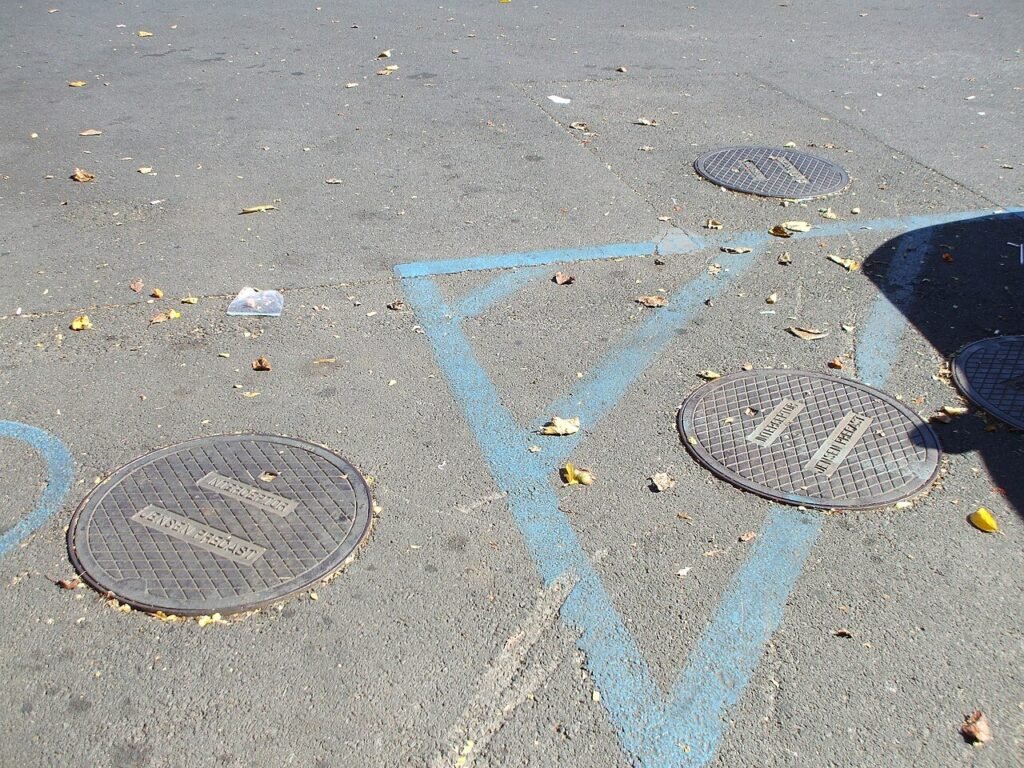
Featured image: in-ground grease trap in a diner parking lot. Photo: 293.xx.xxx.xx / Wikimedia Commons, CC BY-SA 3.0. Rules last checked 29 October 2026.
